There is something deeply humbling about standing at the foot of a Himalayan giant. The air grows thin, the wind bites harder, and yet your chest fills with something that has no name — a mix of awe, reverence, and raw human longing. India is home to some of the most breathtaking mountain terrain on the planet. Tucked across the Himalayas, the Karakoram, and the Zanskar ranges, these towering summits have drawn explorers, pilgrims, soldiers, and dreamers for centuries.
If you’ve ever looked up at a snow-capped peak and felt that strange pull — this list is for you. Let’s journey through India’s ten highest peaks, one vertical foot at a time.
1. Kangchenjunga — 8,586 m (28,169 ft)
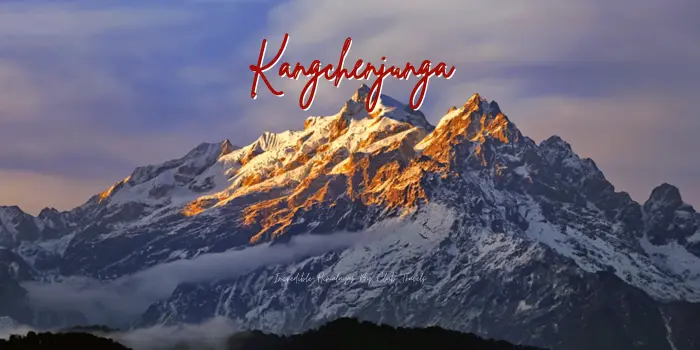
The Guardian of the East
Straddling the border between India (Sikkim) and Nepal, Kangchenjunga holds the distinction of being the third-highest mountain in the world and the highest peak entirely within India’s territorial claim. Its name in Tibetan roughly translates to “Five Treasures of Snow,” referring to its five summits — each considered a sacred repository of salt, gold, gems, grain, and holy scripture by the local Sikkimese people.
What makes Kangchenjunga uniquely fascinating is the fact that by tradition and out of deep respect for the indigenous communities of Sikkim, climbers stop a few feet short of the actual summit. The very top is left untouched — a rare act of cultural sensitivity in the hyper-competitive world of high-altitude mountaineering.
The first successful ascent came in 1955 by a British team led by Charles Evans. Since then, the mountain has remained one of the least frequently climbed 8,000-meter peaks, partly due to its remote location and partly due to its fearsome weather patterns. For trekkers, the Goecha La trek in Sikkim offers some of the most spectacular views of Kangchenjunga’s western face without requiring technical climbing skills.
Best time to visit: April–May or October–November
Base camp location: Yuksom, Sikkim
2. Nanda Devi — 7,816 m (25,643 ft)
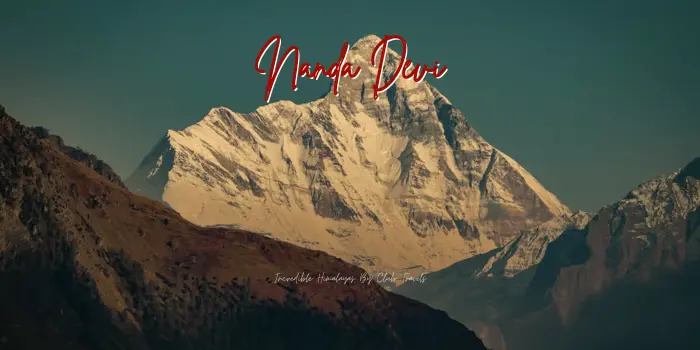
The Bliss-Giving Goddess
If Kangchenjunga is the guardian of the east, Nanda Devi is the soul of the Garhwal Himalayas. Rising majestically in Uttarakhand, she is the highest peak entirely within Indian territory (not shared with any neighboring country) and the second-highest peak overall in India.
Nanda Devi is not just a mountain — she is a deity. The people of Uttarakhand regard her as the patron goddess of the region, and her name literally means “Bliss-Giving Goddess.” The Nanda Devi Raj Jat, a massive pilgrimage undertaken every twelve years, draws thousands of devotees who walk for weeks through the high-altitude wilderness as an act of devotion.
The peak sits at the center of the Nanda Devi Biosphere Reserve, a UNESCO World Heritage Site since 1988. The inner sanctuary — a ring of mountains surrounding the peak — remained one of the most inaccessible places on Earth until the 1930s. Eric Shipton and Bill Tilman first entered the inner sanctuary in 1934, and the summit was reached in 1936 by Tilman and Noel Odell.
Today, the inner sanctuary is closed to climbers and trekkers to protect its unique ecosystem. This has actually allowed the region to recover beautifully — snow leopards, Himalayan black bears, and blue sheep roam its protected valleys.
Best time to visit: May–June or September–October
Trekking base: Lata Village, Chamoli District, Uttarakhand
3. Kamet — 7,756 m (25,446 ft)
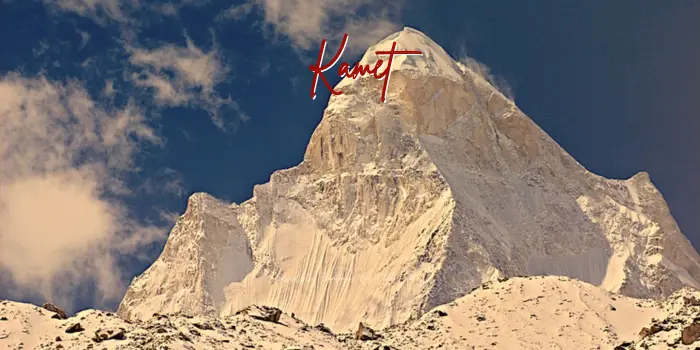
The Overlooked Giant
Ask most people to name a high peak in Uttarakhand, and very few will say Kamet. Yet this mountain in the Garhwal division stands as the third-highest peak in India and was actually the highest summit climbed anywhere in the world when Frank Smythe’s British expedition first reached its top in 1931.
Kamet sits close to the Tibet border and has historically been difficult to access. The mountain’s sheer mass — it is a broad, sprawling summit rather than a needle-thin spire — makes it deceptively challenging. The approach through the Alaknanda and Dhauli Ganga valleys is itself an adventure, passing through dense forests and remote shepherd settlements.
One of the lesser-known facts about Kamet is its role as a training ground for Indian mountaineers. The Indian Mountaineering Foundation has frequently used its lower slopes and satellite peaks for expedition preparation. It remains a serious undertaking requiring technical expertise, but compared to the 8,000-meter giants, it receives far fewer attempts — which gives it a wild, untamed character that many experienced alpinists find deeply appealing.
Best time to climb: June–July
Nearest town: Joshimath, Uttarakhand
4. Saltoro Kangri — 7,742 m (25,400 ft)
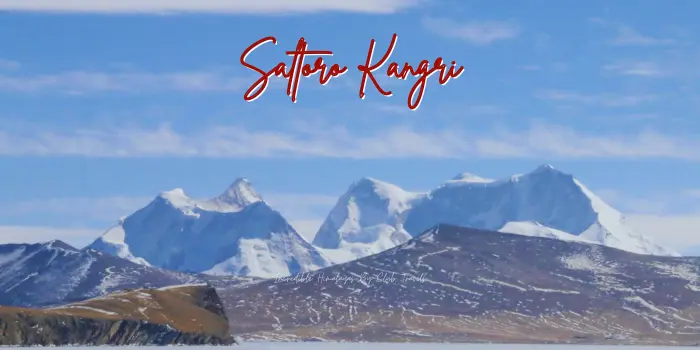
The Silent Sentinel of Siachen
Saltoro Kangri occupies a unique and politically charged place among India’s highest peaks. Located in the Saltoro Range in Ladakh — part of the broader Karakoram — this peak sits in one of the most militarized high-altitude zones on Earth: the Siachen region.
The mountain was first climbed in 1962 by a Japanese expedition, and its summit offers views of the massive Siachen Glacier, the world’s longest non-polar glacier and a site of ongoing territorial dispute between India and Pakistan. Indian Army soldiers have maintained a presence on the Saltoro Ridge at altitudes exceeding 6,000 meters for decades — a feat of human endurance that is almost incomprehensible.
For mountaineers, Saltoro Kangri presents both a physical and bureaucratic challenge. Permits for climbing in this region are tightly regulated, and expedition planning requires coordination with Indian defense authorities. Those who do make it to the summit describe views that are both hauntingly beautiful and historically sobering.
Best time to climb: July–August
Location: Saltoro Range, Ladakh (near the Line of Control)
5. Saser Kangri I — 7,672 m (25,170 ft)
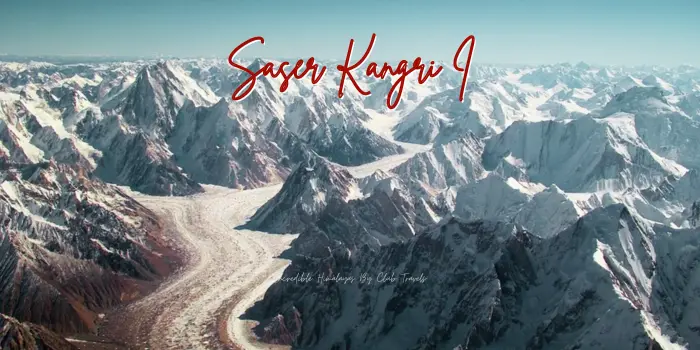
The Karakoram Colossus
Deep in the Eastern Karakoram of Ladakh stands Saser Kangri I, the highest peak of the Saser Muztagh subrange and the fifth-highest mountain in India. It forms part of a cluster of high summits that collectively make the Saser Kangri massif one of the most dramatic landscapes in all of Ladakh.
The mountain was first climbed in 1973 by an Indo-Japanese expedition, and it remains a relatively challenging objective. The approach involves crossing high-altitude desert terrain, navigating glaciers, and dealing with the extreme cold that characterizes the Eastern Karakoram even in summer. The Shyok River valley below provides a stunning gateway, with its turquoise waters cutting through barren lunar-like landscapes.
Saser Kangri I is particularly notable for the technical demands of its upper ridges. Unlike some other high Indian peaks where the challenge is primarily about altitude and endurance, this mountain demands real mixed climbing skills in its upper sections. It is the kind of peak that rewards experienced high-altitude alpinists with a sense of genuine accomplishment.
Best time to climb: July–August
Gateway town: Nubra Valley, Ladakh
6. Mamostong Kangri — 7,516 m (24,659 ft)
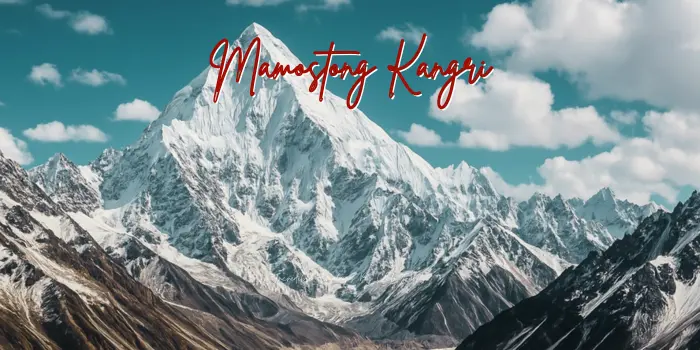
The Forgotten Titan
Mamostong Kangri doesn’t appear on many bucket lists, but perhaps it should. Located in the Rimo Muztagh subrange of the Karakoram in Ladakh, it is the highest peak of the Rimo group and represents one of the most remote high-altitude destinations in India.
The mountain was first summited in 1984 by an Indian team, and the ascent is considered technically demanding. The surrounding landscape is extraordinary — massive glaciers, serrated ridgelines, and the eerie silence of a region so remote that wildlife outnumbers human visitors by an absurd ratio. Snow leopards have been reportedly spotted in the lower valleys.
What makes Mamostong Kangri special is precisely what makes it difficult: its isolation. There are no teahouses, no well-worn trekking trails, no cell phone coverage. An expedition here means true self-sufficiency in one of the harshest environments on Earth. It is the kind of mountain that tests not just your body but your organizational capacity and mental resilience.
Best time to climb: July–August
Permit type: Restricted Area Permit required
7. Rimo I — 7,385 m (24,229 ft)
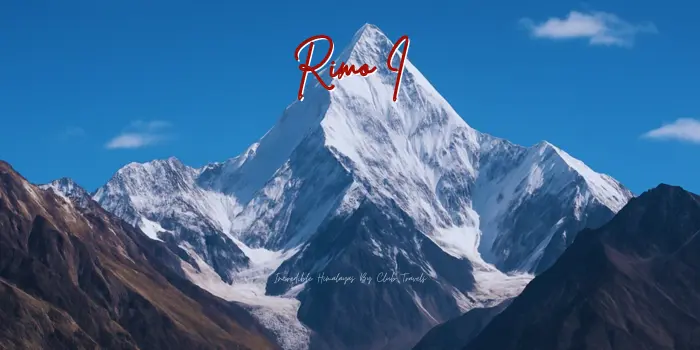
The Peak at the Edge of Maps
Rimo I is the highest point of the Rimo massif in Eastern Karakoram — a group of peaks so remote and so close to sensitive border zones that they remained officially unclimbed until 1988, when an Indo-Japanese expedition finally reached the top. There’s something romantically defiant about a peak in the late 20th century that still hadn’t been climbed.
The name “Rimo” comes from the Turkic word for “striped mountain,” a reference to the dramatic rock and ice patterns that streak its flanks. The approach to base camp involves traveling along the Shyok River and crossing some of the most sparsely populated terrain in all of India. Rimo I is not just a mountaineering objective — it is an expedition into genuine wilderness.
The nearby Rimo Glacier and the views toward the Siachen region from high on the mountain’s flanks are reportedly among the most dramatic in Karakoram. This is not a mountain for beginners or even intermediate alpinists. It demands a resume of serious Himalayan experience before any rational expedition team would include it in their plans.
Best time to climb: July–August
Location: Eastern Karakoram, Ladakh
8. Hardeol — 7,151 m (23,458 ft)
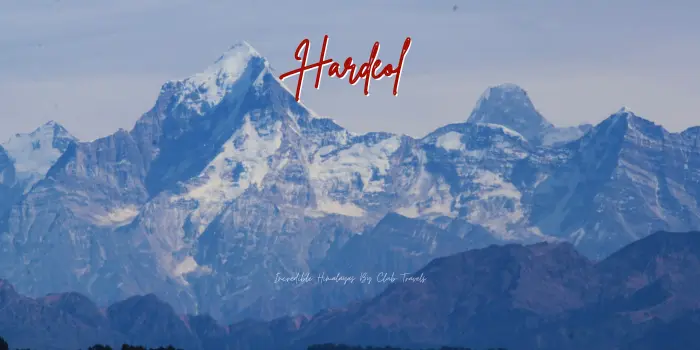
The Temple of God
Back in Uttarakhand, Hardeol — whose name means “Temple of God” — rises as a proud, pyramid-shaped summit in the Kumaon Himalayas. It is part of the same cluster of peaks that includes Nanda Devi and Trisul, and its religious significance to the people of Kumaon is deep and long-standing.
Unlike some of the more remote Karakoram peaks, Hardeol is accessible via the Milam Glacier region — a spectacular trekking route that passes through ancient trading villages that once sat on the route between India and Tibet. The Milam Valley trek is one of the finest high-altitude treks in Uttarakhand, and Hardeol watches over the entire valley from its commanding position.
The mountain was first climbed in 1978 by an Indian team, and it remains a respected technical objective. Its southern face in particular is a serious challenge involving steep ice and rock. For those who aren’t ready to attempt the summit, the views from the Milam Glacier are themselves worth the effort of getting there.
Best time to trek/climb: May–June or September–October
Base area: Milam Valley, Pithoragarh District, Uttarakhand
9. Chaukhamba I — 7,138 m (23,419 ft)
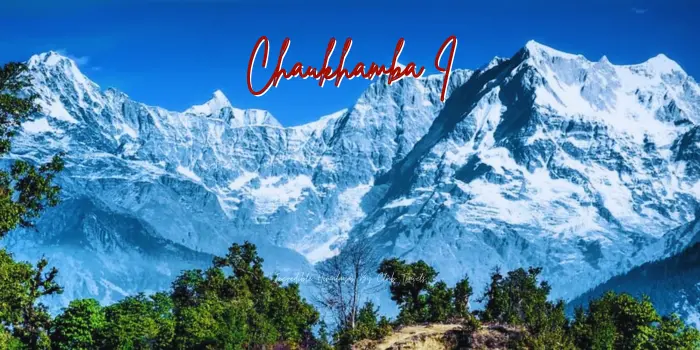
The Four-Pillared Throne
Standing at the head of the Gangotri Glacier, Chaukhamba I is the highest of a four-peaked massif whose name literally means “four pillars” in Sanskrit. These four summits, when viewed from certain angles in the Garhwal valleys below, do look remarkably like the four posts of a grand throne — and the locals have always considered this mountain a seat of divine authority.
Chaukhamba I and its sister peaks are the source of the Alaknanda River, one of the two main tributaries of the Ganga. There is a profound ecological and spiritual importance to this mountain beyond its altitude. Pilgrims traveling to Badrinath and the Valley of Flowers pass through landscapes shaped and fed by the glaciers that cling to Chaukhamba’s flanks.
The mountain was first climbed by a Soviet expedition in 1952. Its technical difficulty is moderate by Himalayan standards for the lower reaches, but the upper sections demand solid ice and mixed climbing skills. The Gangotri region, where Chaukhamba is based, is one of the most visited parts of the Indian Himalayas — both for its religious significance and its extraordinary trekking opportunities.
Best time to visit: May–June or September–October
Trekking hub: Gangotri, Uttarakhand
10. Trisul I — 7,120 m (23,360 ft)
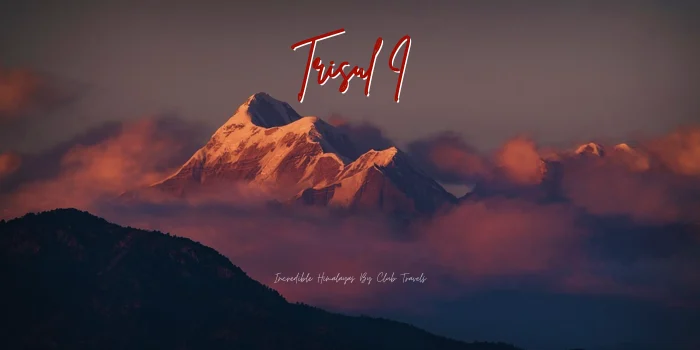
The Trident of Shiva
No list of India’s great peaks would feel complete without Trisul — the three-peaked massif in the Kumaon Himalayas whose name evokes the trident of Lord Shiva himself. Trisul I, the highest of the three summits, holds a place of remarkable historical importance: in 1907, it became the first peak above 7,000 meters ever to be climbed anywhere in the world, summited by Tom Longstaff, a British mountaineer, along with two Alpine guides.
That single fact deserves a moment of appreciation. Before Everest, before Annapurna, before any of the now-famous 8,000-meter ascents, it was Trisul that proved human beings could reach truly extreme altitudes and survive. Longstaff’s ascent was a watershed moment in global mountaineering history.
Trisul sits near the Roopkund Lake trail, one of the most popular high-altitude treks in India. The mysterious lake, famous for its ancient skeletal remains, lies in the shadow of these great peaks. Trekkers who make the journey to Roopkund are rewarded with views of Trisul that are genuinely unforgettable — a sharp, snow-white trident against a deep blue Himalayan sky.
Best time to visit: May–June or September–October
Nearby trek: Roopkund Trek, Chamoli District, Uttarakhand
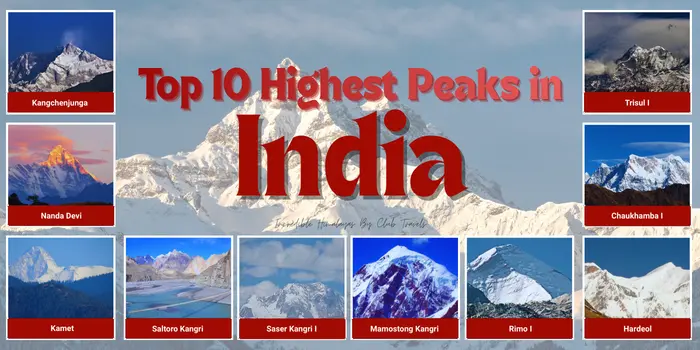
A Quick Reference: India’s Top 10 Highest Peaks
| Rank | Peak | Height (m) | Height (ft) | Location |
| 1st | Kangchenjunga | 8,586 | 28,169 | Sikkim |
| 2nd | Nanda Devi | 7,816 | 25,643 | Uttarakhand |
| 3rd | Kamet | 7,756 | 25,446 | Uttarakhand |
| 4th | Saltoro Kangri | 7,742 | 25,400 | Ladakh |
| 5th | Saser Kangri I | 7,672 | 25,170 | Ladakh |
| 6th | Mamostong Kangri | 7,516 | 24,659 | Ladakh |
| 7th | Rimo I | 7,385 | 24,229 | Ladakh |
| 8th | Hardeol | 7,151 | 23,458 | Uttarakhand |
| 9th | Chaukhamba I | 7,138 | 23,419 | Uttarakhand |
| 10th | Trisul I | 7,120 | 23,360 | Uttarakhand |
What Every Aspiring Mountain Traveler Should Know
Permits matter. Most high-altitude peaks in India — especially those in Ladakh near sensitive border zones — require special permits. The Indian Mountaineering Foundation (IMF) in New Delhi is the central body for climbing permits. Apply well in advance and budget extra time for bureaucratic processing.
Altitude acclimatization is non-negotiable. Even experienced trekkers can be floored by Acute Mountain Sickness if they ascend too quickly. The golden rule: climb high, sleep low. Spend at least a couple of nights at intermediate altitudes before pushing for higher elevations.
Leave No Trace. India’s mountain ecosystems are fragile. The glaciers are retreating. The rivers are stressed. Many of these regions are biodiversity hotspots with endemic species found nowhere else. Whatever you carry in, carry out. Respect local customs and wildlife.
Hire locals. Local guides, porters, and expedition staff not only enrich your experience with cultural knowledge and practical mountain wisdom — they are the backbone of sustainable mountain tourism in India. Supporting local livelihoods is one of the most meaningful things an adventure traveler can do.
India’s Mountains Are Calling
The Himalayas and Karakoram are not simply geological features — they are living, breathing presences that have shaped civilizations, inspired religions, and tested the boundaries of human capability for thousands of years. India’s highest peaks are not just numbers on an altimeter. They are stories waiting to be encountered.
Whether you’re planning a serious technical ascent, a soul-refreshing trek, or simply building a dream from your armchair — these ten mountains deserve a place in your imagination. Because sometimes, all it takes is knowing a peak exists to feel a little more connected to this magnificent, improbable world we share.
The mountains will wait. But your sense of wonder shouldn’t.
Frequently Asked Questions
The highest peak associated with India is K2, which rises to 8,611 meters in the Karakoram range. However, the highest peak located entirely within India is Nanda Devi, which stands at 7,816 meters in Uttarakhand.
The second highest mountain connected to India is Kanchenjunga, located on the border of India and Nepal. It has an elevation of 8,586 meters and is the third highest mountain in the world.
Most of the highest mountains in India are located in the Himalayan and Karakoram mountain ranges, mainly in the regions of Ladakh, Uttarakhand, Sikkim, and Jammu & Kashmir.
Nanda Devi in Uttarakhand is the highest peak that lies completely within Indian territory, with an elevation of 7,816 meters.
The Himalayas and the Karakoram Range contain the highest peaks in India, including famous mountains such as K2, Kanchenjunga, Kamet, and Saltoro Kangri.
Disclaimer: Elevation figures are based on standard surveying data. Always consult the Indian Mountaineering Foundation and local authorities for the latest permit requirements and route conditions before planning any expedition.